React.js Faces Critical 10.0 Vulnerability: Understanding React2Shell (CVE-2025-55182)
Introduction
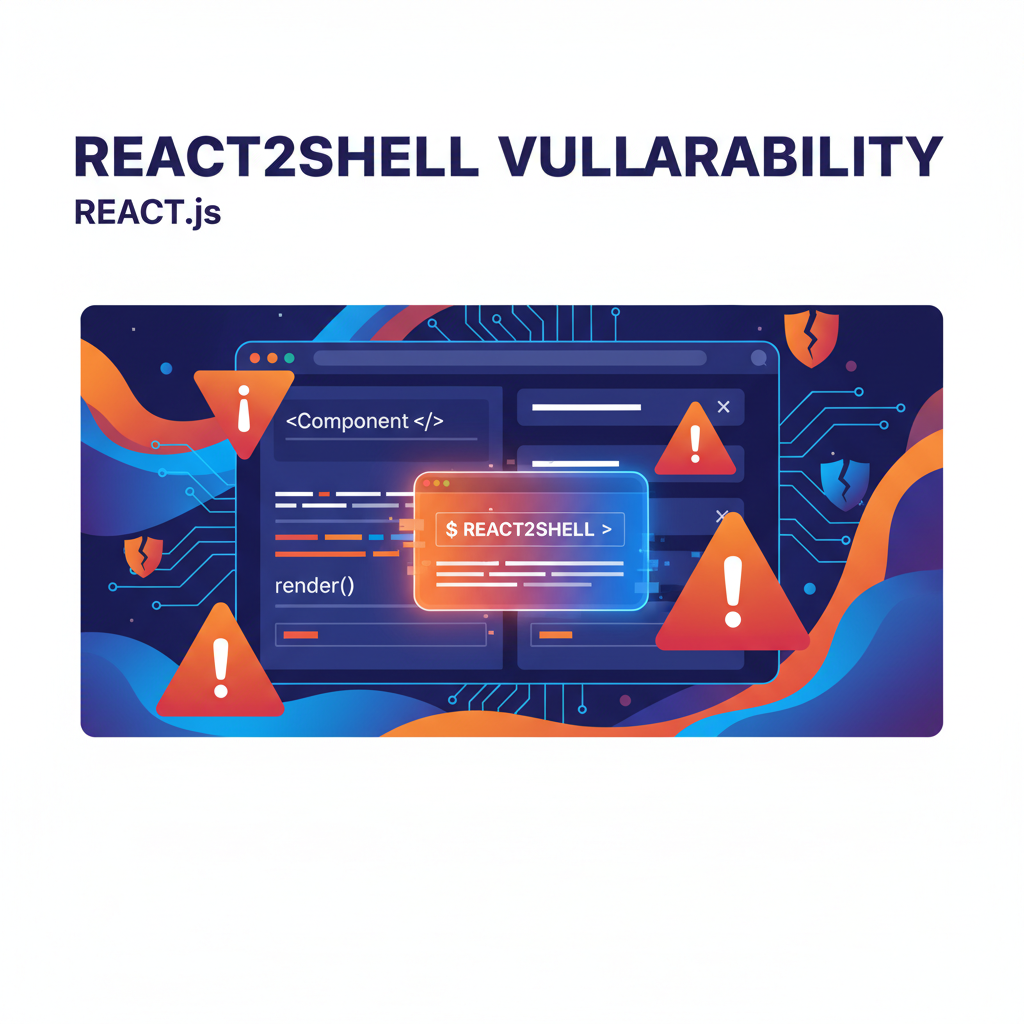
The JavaScript ecosystem, particularly the React.js community, is facing a significant security alert. A newly discovered vulnerability, named React2Shell and officially tracked as CVE-2025-55182, has been rated with a maximum critical score of 10.0. This flaw has raised concerns across development teams due to its potential to compromise web applications built with React.
What is React2Shell?
React2Shell is a critical vulnerability that allows malicious actors to execute unauthorized code within React-based applications. The exploit targets specific patterns in React’s component handling, which could allow attackers to inject and execute shell commands remotely. This type of security gap can have severe consequences for applications handling sensitive user data, financial transactions, or internal company tools.
How the Vulnerability Works
At a technical level, React2Shell manipulates the way React processes dynamic inputs in JSX components. By crafting specially structured inputs, an attacker can bypass normal validation and trigger command execution on the server or client environment. While full exploitation requires certain conditions, the vulnerability is considered highly severe because even minimal exposure could lead to complete system compromise.
Who is Affected?
All developers using React versions prior to the patched release are potentially at risk. Applications using older component libraries or relying on unverified external modules are particularly vulnerable. Security researchers recommend immediate auditing of dependencies and proactive patching to mitigate the risk.
Industry Implications
- Financial and e-commerce applications are at high risk due to potential data breaches.
- Open-source projects using React components must update dependencies promptly.
- DevOps teams should enhance monitoring for unusual activity and apply security best practices.
According to a 2025 report by Snyk, over 30% of active React projects in the wild could have been exposed to similar vulnerabilities in the past year, highlighting the importance of timely updates and dependency checks.
Mitigation and Best Practices
Developers should take the following steps to protect their applications:
- Upgrade to the latest patched React version immediately.
- Audit all third-party libraries for known vulnerabilities.
- Implement server-side input validation to prevent malicious payloads.
- Enable runtime monitoring and alerts for suspicious behavior.
- Regularly review security advisories from official repositories.
By following these steps, teams can minimize the risk posed by React2Shell and strengthen their overall application security posture.
Conclusion
The discovery of React2Shell serves as a critical reminder of the evolving threat landscape for modern web applications. React.js developers must prioritize updates, maintain vigilance on dependencies, and implement best practices for input handling and security monitoring. Staying proactive ensures applications remain resilient against severe exploits like CVE-2025-55182. Watching technical breakdowns and tutorials on the topic can provide deeper insights into the vulnerability and mitigation techniques.