The Unhinged World of Tech in 2026: 10 Trends That Will Define the Future of Development
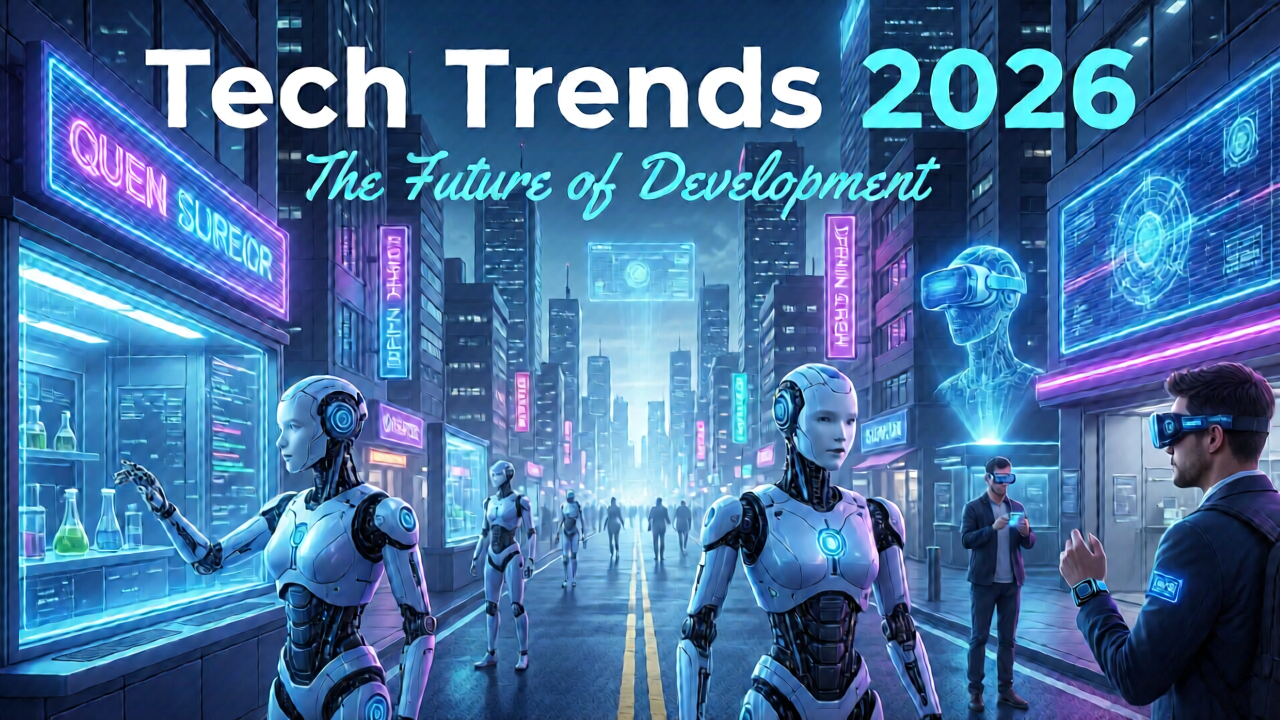
The world of technology is evolving at breakneck speed, with innovations that seem to blur the line between science fiction and reality. As we approach 2026, a number of cutting-edge trends are emerging that are set to dramatically shape the future for developers and businesses alike. From household robots to quantum computing, these developments are not just transforming how we work—they are revolutionizing the very fabric of our digital existence. In this article, we’ll explore 10 key tech trends that will define the tech landscape by 2026.
1. The Changing Developer Job Market
By 2026, the developer job market will look very different. While the demand for skilled developers remains high, the types of roles and the skills required will be in constant flux. Automation and AI are beginning to take over many traditional coding tasks, meaning developers will need to adapt by focusing on higher-level tasks such as AI-driven development, algorithm optimization, and system architecture. With the increasing reliance on cloud infrastructure, expertise in cloud platforms like AWS, Azure, and Google Cloud will be essential.
2. The AI Bubble: Will It Burst?
Artificial Intelligence (AI) has rapidly moved from a futuristic concept to a mainstream technology that is increasingly integrated into software applications, consumer products, and industrial systems. However, there are growing concerns about the potential for an AI bubble, fueled by hype and inflated expectations. By 2026, we will likely see a market correction as we separate the practical, effective applications of AI from the unrealistic promises made by vendors. Developers will need to focus on delivering AI solutions that provide real value, rather than chasing the next big trend.
3. The Rise of Household Robots
In the next few years, robots will become a common feature in households, with applications ranging from cleaning and cooking to personal assistants and elderly care. The adoption of robotics is accelerating, thanks to advancements in machine learning, artificial intelligence, and robotics engineering. Companies like Boston Dynamics and Tesla are already working on robots that can navigate environments with human-like agility. By 2026, household robots could become as ubiquitous as smartphones, transforming everyday life and creating new opportunities for developers.
4. Wearable AI: From Gadgets to Life Assistants
Wearables, from smartwatches to augmented reality (AR) glasses, are evolving beyond simple notification devices into full-fledged AI-powered life assistants. These devices will not just track your health or provide notifications—they will be able to analyze your environment, anticipate your needs, and provide real-time recommendations. Developers will need to create seamless integrations between wearables and other technologies to deliver an experience that is not only useful but also intuitive.
5. AR/VR: The Future of Immersive Experiences
Augmented Reality (AR) and Virtual Reality (VR) are expected to undergo significant transformations by 2026. With the rise of 5G networks, the latency and bandwidth issues that currently hinder immersive experiences will be greatly reduced. This will allow developers to create more realistic and interactive AR and VR environments for everything from gaming to remote work. The ability to simulate complex environments for training, education, and entertainment will become more widespread, making AR/VR a staple in both business and consumer applications.
6. Chip Dominance: Powering the Future
The battle for supremacy in chip manufacturing will intensify in the next decade. Companies like Intel, AMD, and Nvidia are already investing heavily in next-generation chips for everything from gaming to artificial intelligence to quantum computing. By 2026, the demand for custom chips tailored to specific tasks will skyrocket, and developers will need to understand how to optimize software for new, more specialized chip architectures.
7. Nuclear Power: A Clean Energy Revolution?
As global energy demands continue to rise, nuclear power may undergo a renaissance in the form of small modular reactors (SMRs) and other innovative technologies. SMRs are being designed to be safer, more efficient, and more flexible than traditional nuclear plants. With the increasing push for sustainable energy solutions, nuclear power could be a major player in the energy mix by 2026, and developers will need to be ready to work on energy-related software applications and infrastructure.
8. Quantum Computing: Breaking the Boundaries of Possibility
Quantum computing is still in its infancy, but by 2026, we may see significant breakthroughs that make quantum computers more practical for solving real-world problems. These powerful machines could revolutionize fields like cryptography, materials science, and artificial intelligence. Developers who specialize in quantum programming languages, such as Q# and Python with quantum computing libraries, will have the opportunity to work on the bleeding edge of computing technology.
9. Digital Tyranny: A Growing Concern
As technology becomes more pervasive, the concerns over privacy, surveillance, and digital control are growing. The rise of surveillance capitalism, where companies collect and monetize vast amounts of personal data, could lead to the creation of “digital tyrannies.” By 2026, we may see new regulatory frameworks and a shift in how personal data is handled. Developers will play a crucial role in creating systems that prioritize privacy, security, and ethical considerations, particularly when it comes to data collection and AI-driven decision-making.
10. Javascript Evolution: Staying Relevant in a Changing World
JavaScript continues to be the dominant language for web development, but as we move into 2026, its role will evolve. New frameworks and libraries will continue to emerge, and JavaScript will adapt to the growing demands of AI, machine learning, and augmented reality. Developers who stay updated with the latest trends in JavaScript development, such as web assembly and progressive web apps, will continue to stay relevant in an ever-changing tech landscape.
Conclusion
The tech landscape of 2026 promises to be a dynamic and ever-evolving space. From artificial intelligence to quantum computing, developers will be at the forefront of these changes, shaping the future of technology in ways that were once only imaginable. Staying informed and adaptable will be crucial to success in this brave new world. While the next few years may be unpredictable, the opportunities for innovation and growth are vast. The key takeaway? Embrace the change, and prepare for an exciting future ahead.